Why Your On-Device AI Feature Fails at 3am When Nobody Is Looking

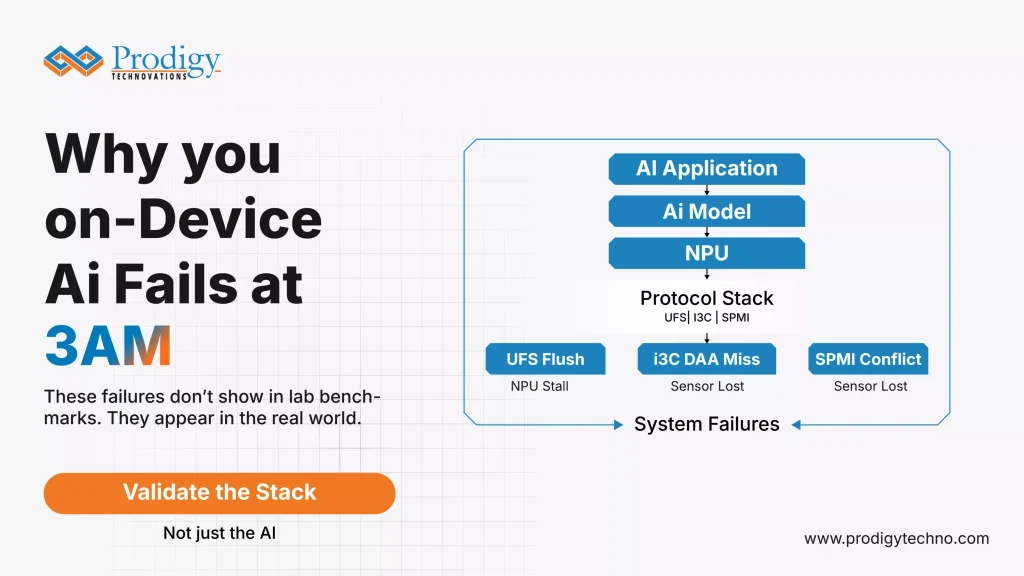
Why Your On-Device AI Feature Fails at 3am When Nobody Is Looking

The AI model is fine. The protocol stack down it is not. The flaw of It Works in the Lab. All of the on-device AI capabilities are verified during shipments. Face recognition gains straight off. The on-demand voice model is an immediate response. Real time camera processing is at full frame rate. The stories from […]

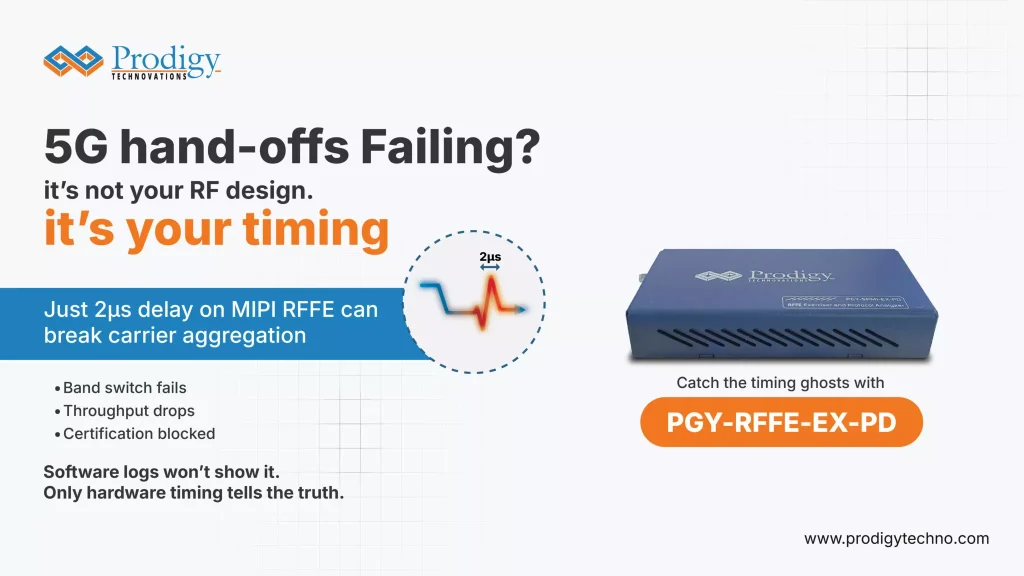
5G Hand offs: RFFE Timing is Killing Your Carrier Certification

5G Hand offs: RFFE Timing is Killing Your Carrier Certification

You have spent eighteen months on your new 5G flagship. Your RF department has adjusted your antennas to surgical accuracy. In laboratory, conditions controlled, the connection is an illusion. Yet there comes the truth, which is, the Carrier Certification. The hand-off fails. Band switching gives the throughput a precipitous fall. The connection is “live” though […]

Why Gen 5 Speed is a Myth (Unless You fix the Protocol)

Why Gen 5 Speed is a Myth (Unless You fix the Protocol)

You have just thrown away a small fortune in Gen 5 server chips. The datasheet promised 32 GT/s. Your promotional staff are already trumpeting about record throughput. But in the rack? The performance is tanking. The work loads in your multitennants are slacking, and your Express Lane is beginning to resemble rush hour at the […]

Is it possible to survive a safety-critical bus infotainment collision?

Is it possible to survive a safety-critical bus infotainment collision?

The amount of pressure to reduce the weight of wiring is extreme in the migration to Zonal Architectures and Software-Defined Vehicles (SDV). It has caused a significant architectural change that has concentrated high-speed Automotive Ethernet backbones as a form of consolidation in order to support both non-critical and infotainment data and safety-critical ADAS traffic. This […]

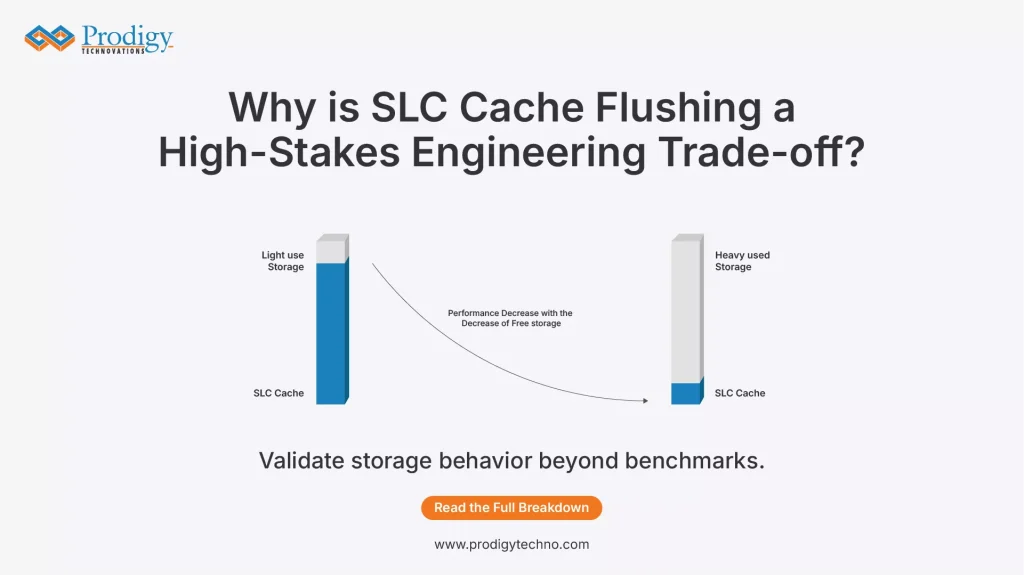
Why is SLC Cache Flushing a High-Stakes Engineering Trade-Off?

Why is SLC Cache Flushing a High-Stakes Engineering Trade-Off?

In the mobile industry, “Day 1” performance is easy to promote. But true engineering skill shows in “Day 180” performance. When a flagship device feels “laggy” after six months of real use, it’s rarely the processor’s fault. Usually, it’s a trade-off problem in the storage layer, especially how the system handles Single Level Cell (SLC) […]

Placeholder

xSPI vs OSPI

xSPI vs OSPI Introduction In embedded systems and high-speed communication, xSPI (eXtended Serial Peripheral Interface) and OSPI (Octal Serial Peripheral Interface) are two popular protocols for interfacing with flash memory and other peripherals. While both are designed to improve data throughput over traditional SPI, they differ in architecture, speed, and implementation. Feature Comparison Feature xSPI […]

Placeholder

Debugging eMMC Boot Failures: Capturing & Analyzing Boot Data with PGY-SSM

Debugging eMMC Boot Failures: Capturing & Analyzing Boot Data with PGY-SSM Embedded systems rely on a flawless boot sequence from their eMMC storage to load firmware and hand off control to application code. Yet misconfigured partitions, corrupted boot data, or unexpected eMMC responses can derail this process, leading to silent failures that are difficult to […]

Placeholder

Understanding xSPI: The Future of High-Speed Flash Memory Interfaces

Understanding xSPI: The Future of High-Speed Flash Memory Interfaces Introduction to XSPI (What is XSPI?) xSPI stands for “eXpanded Serial Peripheral Interface”. It’s a high-speed communication protocol designed to interface with NOR flash memory and other peripherals. xSPI is an enhanced version of the standard SPI, offering faster data transfer speeds and greater efficiency. xSPI […]

1–10 of 74 Blogs

Request For Quote

Share your requirement and our team will provide a tailored quote based on your validation needs.

"*" indicates required fields

This field is for validation purposes and should be left unchanged.
Address*

Request For Demo

Tell us your use case and our team will schedule a product demo aligned to your validation workflow.

"*" indicates required fields

This field is for validation purposes and should be left unchanged.
Address*

Request A Demo

Tell us your use case and our team will schedule a product demo aligned to your validation workflow.

"*" indicates required fields

This field is for validation purposes and should be left unchanged.
This field is hidden when viewing the form
Address*

Request Quote

Share your requirement and our team will provide a tailored quote based on your validation needs.

"*" indicates required fields

This field is for validation purposes and should be left unchanged.
Address*